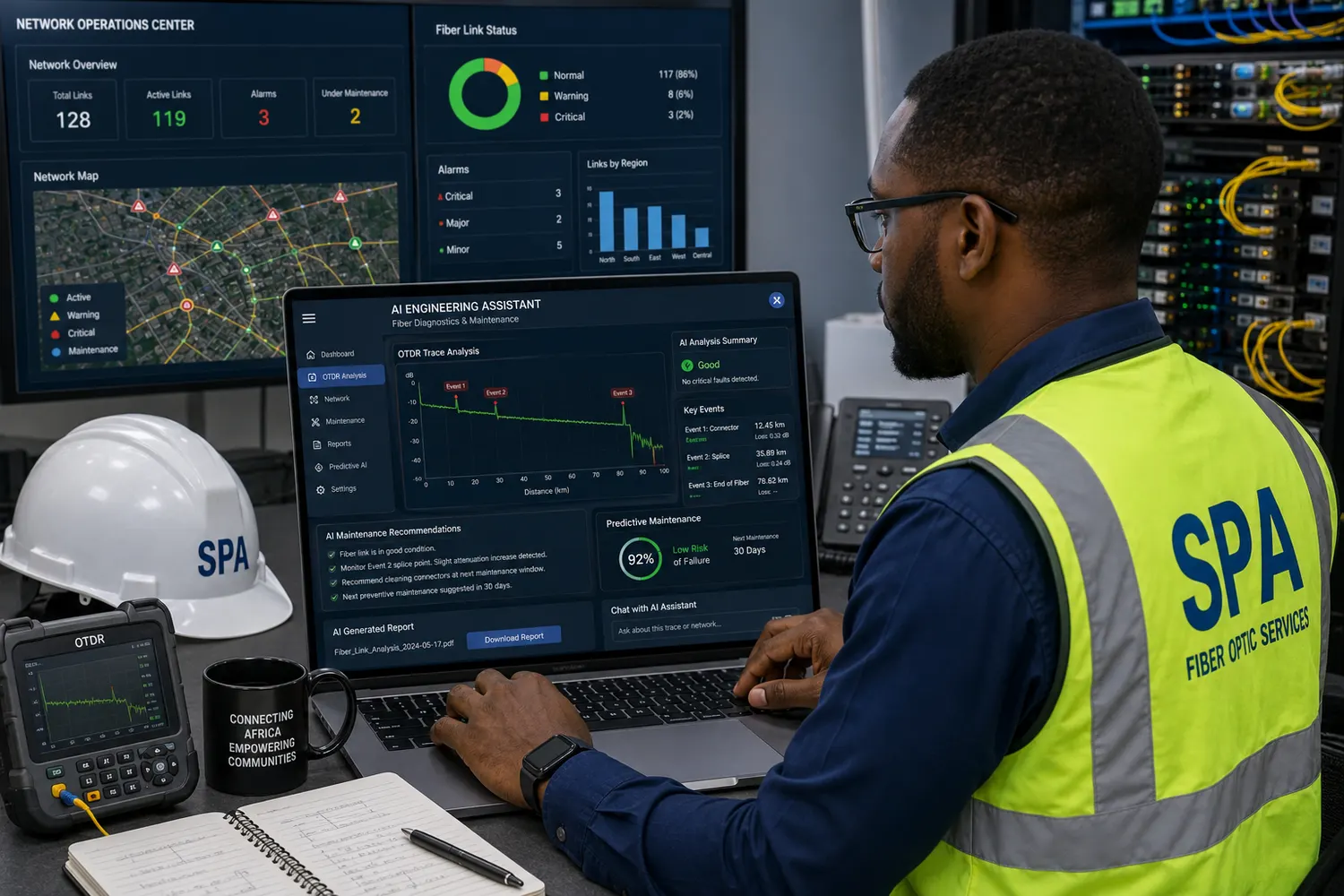
Engineering the next generation of telecom.
Connecting physical infrastructure with digital intelligence.
From building networks to building intelligent network operations.
Telecommunications is no longer only about fibre, towers, cables, equipment and power. Modern networks are data-driven, digitally managed and increasingly intelligent.
- A field engineer can capture site information digitally.
- A network planner can use intelligent tools to analyse routes and optimise designs.
- A technician can use digital evidence to document completed work.
- Project teams can use data to track progress, identify gaps and improve decisions.
- AI can assist with analysis, planning and technical workflows.
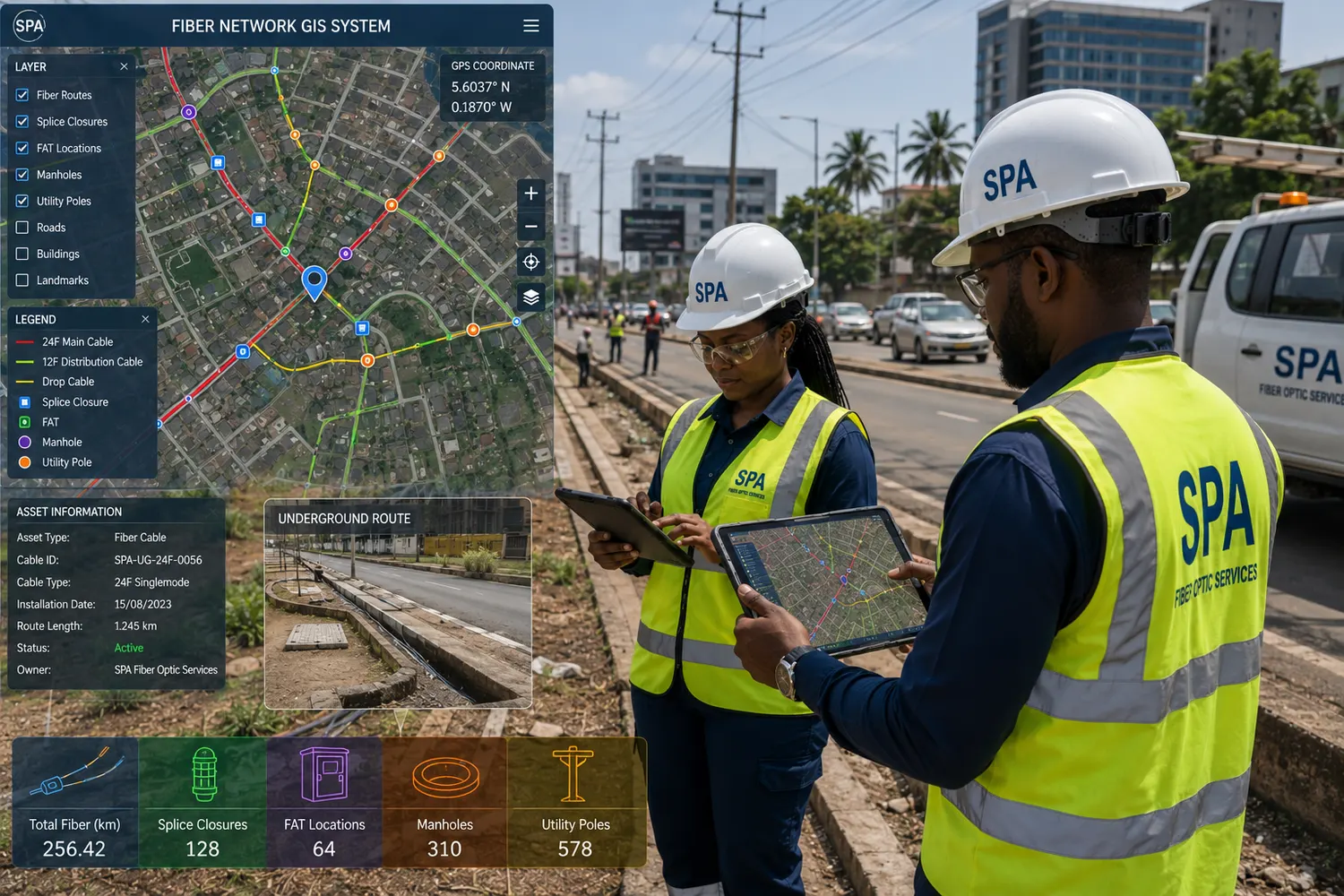
Telecom infrastructure stays physical. Fibre must still be installed, towers constructed, power systems operated and equipment deployed. What is changing is how those assets are planned, documented, monitored, analysed and maintained.
We engineer the physical network. We connect it to digital intelligence.
Intelligence for the engineering workflow
Artificial intelligence can help telecom professionals process information, analyse technical situations and work faster. Our focus is practical engineering applications, not technology for its own sake.
AI-assisted engineering
Support for technical research, engineering workflows, documentation and structured problem-solving.
Network planning
AI-assisted approaches to route planning, network analysis and design support.
Technical analysis
Organising information, comparing technical conditions and surfacing patterns that need engineering attention.
Fault diagnosis
Helping technicians analyse available information, identify likely fault areas and structure troubleshooting.
Productivity tools
Document preparation, technical checklists, project summaries, knowledge search and evidence review.
AI should help engineers work smarter — not replace engineering judgement.
Protecting the digital layer of the network
As infrastructure becomes more connected, the information around that infrastructure matters more: project data, site information, network configurations, digital credentials and technical documents.
Infrastructure security
Cybersecurity considerations affecting telecom infrastructure and connected systems.
Digital access control
Controlled access, appropriate permissions and responsible use of systems and information.
Data protection
Protecting project information, technical documentation and sensitive operational data.
Field cybersecurity
Security awareness in field operations, on mobile devices, digital tools and connected workflows.
Security awareness
Helping technical teams recognise common digital risks and understand their responsibilities.
The smarter the network, the more important security becomes.
Turning field activity into connected information
Digitisation is more than moving paper onto a computer. It is a better connection between field activity, data, evidence, decision and action.
Digital project management
Digital workflows for project activities, information, progress and delivery requirements.
Digital documentation
Capturing, organising and maintaining project evidence in a structured environment.
Digital evidence workflows
Accurate capture and upload of required field evidence into the project system, with the correct activity and documentation.
GIS
Geographic information supporting route planning, network mapping and asset visibility.
Data & analytics
Turning project information into insight for planning, monitoring and reporting.
Digital quality control
Connecting inspections, evidence, actions and close-out through structured digital processes.
What we build physically must also be documented digitally.
From field information to engineering decision
On a fibre project with many sites, teams capture photos, OTDR results, route information, installation records, quality information and site conditions. Rather than leaving that scattered across files and devices, digital and AI-assisted tools organise it, flag missing evidence, structure technical summaries and highlight what needs human review.
The engineer still makes the decision. AI helps the engineer get there faster.
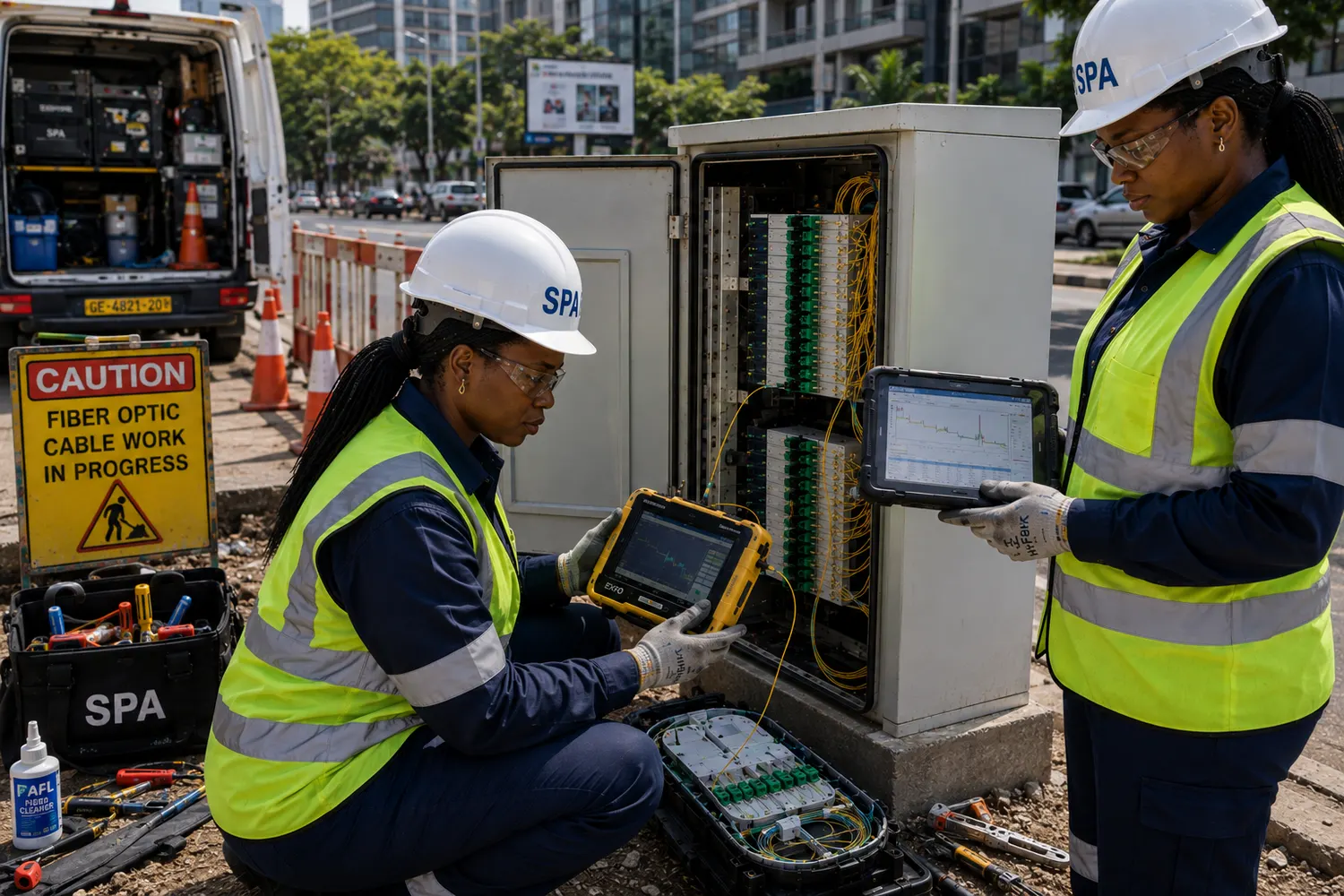
Connecting the whole project.
- 01
Physical
Fibre · Towers · Civil · Power · Mobile infrastructure
- 02
Digital
GIS · Documentation · Data · Project systems
- 03
Intelligence
AI · Analytics · Assisted decision support
- 04
Security
Cybersecurity · Access control · Data protection
- 05
Outcome
Better visibility. Better decisions. Better project control.
From design to operations.
- Plan
- Design
- Build
- Test
- Handover
- Operate
- Improve
- Plan
- GIS · Data · AI-assisted analysis
- Design
- Digital engineering · CAD · Network planning
- Build
- Digital workflows · Field evidence · Quality tracking
- Test
- Digital records · Technical data · Results analysis
- Handover
- Structured evidence · Documentation · Asset information
- Operate
- Maintenance data · Analytics · Troubleshooting support
- Improve
- AI · Automation · Data-driven insight
It makes good people more capable.
AI can organise information, digital tools can improve visibility, data can improve decisions and automation can reduce repetitive work. Experienced engineers, competent technicians, HSEQ professionals and project leaders remain responsible for decisions, approvals and execution.
People + engineering + data + AI. That is the model.
For our clients
Turn project information into project intelligence.
- Digital project workflows
- Digital documentation
- GIS and network mapping
- Data organisation
- AI-assisted technical workflows
- Digital quality control
- Cybersecurity awareness
- Digital evidence management
Physical infrastructure. Digital intelligence. Human expertise.
We engineer the network, digitise the workflow, apply intelligence, protect the information and prepare for what comes next.