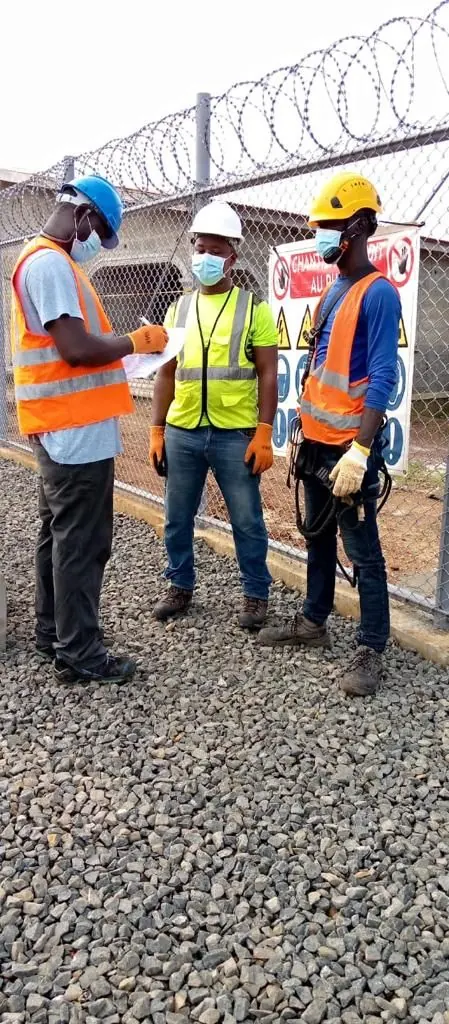
Connecting telecom projects with skilled people.
From project demand to project-ready talent.
Telecommunications projects move fast.
- 01
A fibre rollout can expand from a few sites to hundreds.
- 02
A mobile network programme can need additional field teams within weeks.
- 03
A tower deployment may need civil, rigging, power and technical people at once.
- 04
A new project may need specific technical skills before mobilisation even begins.
The challenge is not simply finding people. It is finding people with the right skills, practical understanding, professional discipline and readiness for the work.
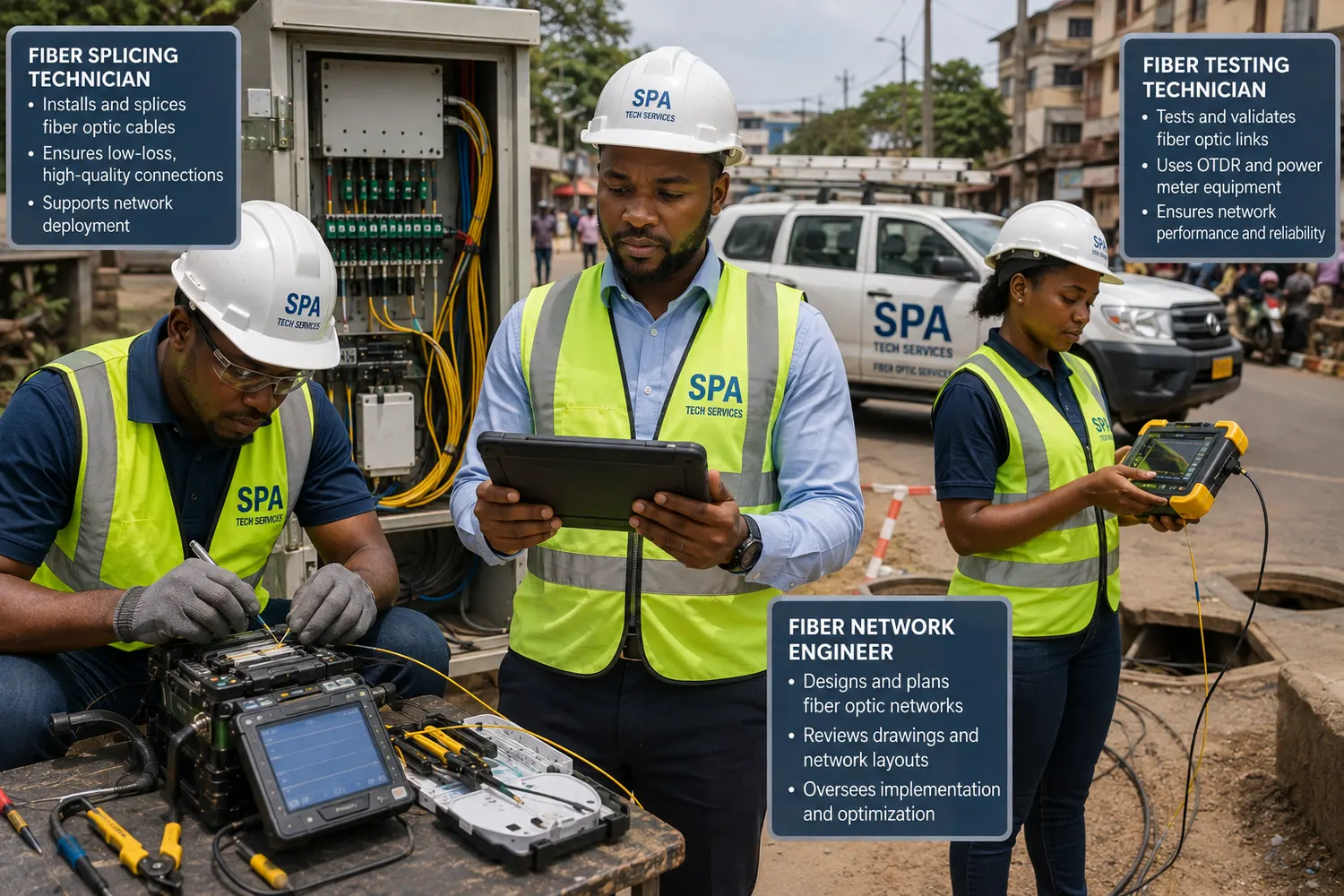
What is SPA-SWAP?
A workforce development bridge for the telecom industry, bringing together our engineering operations and the SPA Academy training ecosystem. Understand what the project needs, develop the right capability, assess readiness, and create a pathway toward deployment.
- Project demand
- Skills
- Training
- Practice
- Assessment
- Deployment
From the project requirement to the project site.
- 01
Project demand
The employer states the workforce requirement — “we need 25 fibre technicians for an upcoming rollout”, or tower and civil teams for a multi-site deployment. We start by understanding the actual requirement.
- 02
Skills identification
The requirement becomes a list of practical competencies: what the team should know, what they should be able to do, which tools they will use, which HSEQ requirements apply and what digital capability is needed.
- 03
Training
Where development is needed, SPA Academy provides focused training around the identified skills — fibre, FTTH and ODN, splicing and testing, tower and civil, telecom power, mobile networks, transmission, network design, HSEQ and digital.
- 04
Practical development
Knowledge alone is not enough. Participants move into practical laboratories, simulations, tools and equipment, project scenarios and troubleshooting activities — from “I understand” to “I can perform”.
- 05
Assessment
Candidates are assessed against the programme requirements: technical knowledge, practical competence, HSEQ awareness, problem-solving, digital skills and workplace readiness.
- 06
Deployment
Where the project and employer requirements align, people progress toward employment, project deployment, internships or the talent pool. The final decision always rests with the employer.
Build the workforce your project actually needs
Mobilise new project teams
Prepare personnel before project deployment.
Upskill existing teams
Close technical and professional skills gaps.
Develop new technicians
Create structured pathways for entry-level talent.
Assess capability
Evaluate technical and practical competencies.
Expand the workforce
Build a pipeline of candidates for future requirements.
Support rapid deployment
Align training with project timelines.
The objective is not simply to increase headcount. It is to strengthen project capability.
Building capability across the infrastructure lifecycle.
- Fibre & FTTH
- Fibre installation · Splicing · OTDR · ODN · FTTH · Maintenance
- Mobile networks
- RAN · Site installation · 4G · 5G · Field support · Maintenance
- Tower & civil
- Foundations · Civil works · Tower erection · Site construction · Inspection
- Telecom power
- DC power · Batteries · Rectifiers · Solar · Energy systems
- Transmission
- Microwave · DWDM · OTN · Backhaul
- Network design
- GIS · AutoCAD · ODN · BOQ · Planning
- HSEQ
- Safety · Quality · Environment · Risk · Field awareness
- Digital & AI
- Digital documentation · AI-assisted workflows · Intelligent telecom tools
When a fibre project needs 30 technicians
A contractor wins a major fibre deployment needing 30 fibre technicians, 5 supervisors, testing personnel, HSEQ awareness and digital documentation support. The employer provides the technical requirements; SPA-SWAP structures the pathway.
One workforce requirement becomes one structured development pathway.
The pathway
- Define roles
- Identify skills
- Select candidates
- Technical training
- Practical fibre exercises
- OTDR & testing practice
- HSEQ preparation
- Competency assessment
- Career profile
- Employer review
- Project deployment
More than recruitment. More than training.
SPA-SWAP sits between the two: a structured bridge between what projects need and what people can do. That bridge is where practical workforce development happens.
Project-led
Built around actual project requirements.
Practical
Training connected to hands-on activities.
Industry-aligned
Focused on telecommunications infrastructure roles.
Assessment-driven
Capability is evaluated rather than assumed.
Career-connected
Training feeds professional profiles and talent pathways.
Future-ready
Digital technology, AI and cybersecurity awareness where relevant.
Build the workforce. Strengthen the project. Deliver the future.
Your next project needs more than equipment. It needs competent people, prepared teams, skilled technicians, responsible supervisors and project-ready professionals.